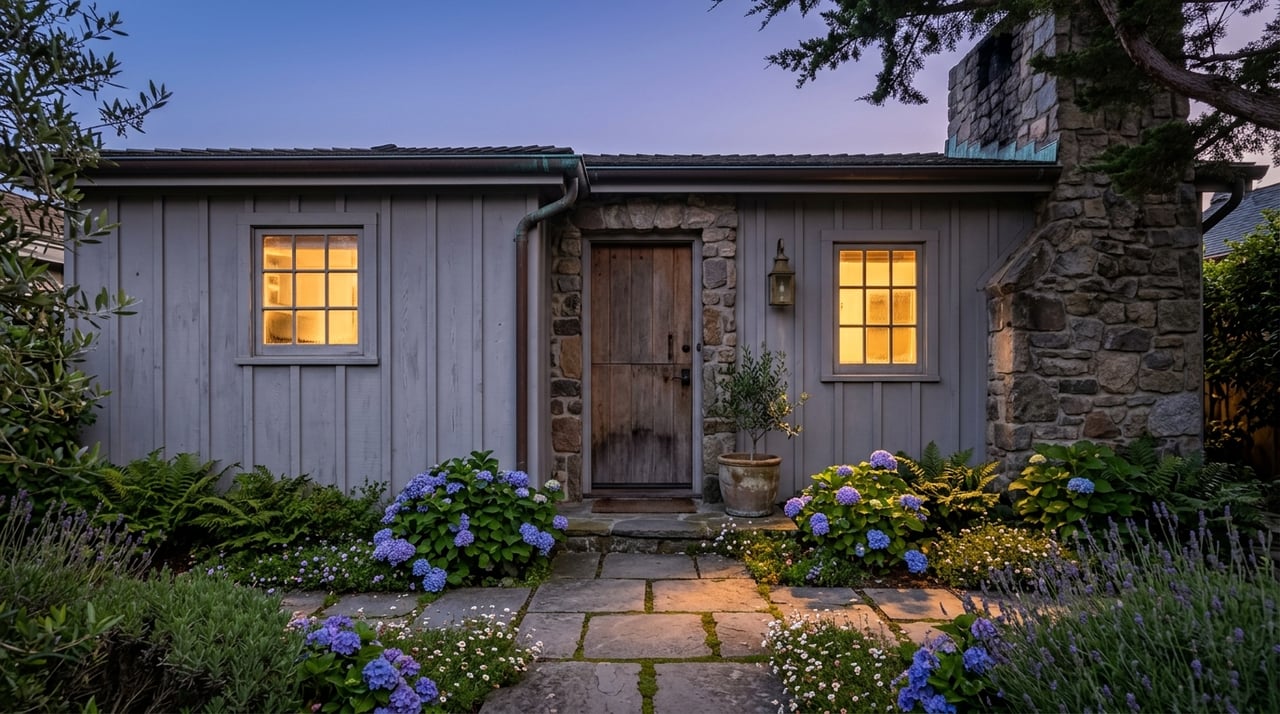
Who’s Behind New Restaurants in Carmel-by-the-Sea for 2026
August 27, 2026
August 27, 2026
Walk Dolores Street on a Tuesday evening and you'll pass a steakhouse that wasn't there a year ago, a brunch spot still pulling a line out the door months after opening, and a storefront wrapped in construction paper that's about to become a cocktail bar in a space that just broke a lot of hearts. It reads like a boom. Outside investors circling a famous village, chasing the tourist dollar. That's the story a first-time visitor would tell.
It's not quite the right one.
Look at who actually signed each lease and a different pattern shows up. The people opening these places aren't new to Carmel. They're the same handful of operators who already run something you've probably eaten at, taking over rooms that used to belong to somebody else's restaurant. The village isn't expanding. It's redistributing.
Carmel-by-the-Sea packs more than 60 restaurants into one square mile, with no chains anywhere in the mix. That's a remarkable density for a town of under 4,000 residents, but it also means the commercial real estate here is about as fixed a supply as you'll find anywhere on the Peninsula. There's no strip mall going up on the edge of town, no new development absorbing overflow demand. When a restaurant closes, the space it leaves behind is one of a genuinely small number of storefronts in the entire village.
That scarcity changes who's positioned to expand. A national group scouting for its next location isn't going to find an easy foothold here. The person best positioned to take over a closed restaurant's space is someone who already knows the landlords, already has the capital from an existing Carmel business, and already has a track record with the Planning Commission. In practice, that means growth here tends to come from inside the village rather than from outside it.
The San Francisco Chronicle has reported on several of these changes. Start with Dolores Street between Ocean and Seventh, where Cantinetta Luca closed after nearly two decades of Italian cooking last September. The space didn't sit empty long. It reopened this July as Char Steakhouse, a $95 bone-in ribeye concept from Bashar Sneeh, who has spent more than two decades building restaurants across Monterey County. Sneeh already owns Dametra Cafe, Porta Bella, and Catch. Char isn't a new operator entering Carmel. It's an established one adding a fourth address.
A few blocks away, the Forge in the Forest closed in early 2025 after more than 50 years in business, a genuine loss for a village that had watched its dog-friendly patio and fire pits since the 1970s. The space is now in the hands of Justin Cogley, the chef who has run the two-Michelin-starred Aubergine for the past 15 years. Cogley is also the name behind the Corner Market, a casual seafood restaurant planned for a former blacksmith's shop on Junipero Street, expected to open in 2027 after a full gut renovation.
Then there's Sade's, Carmel's oldest dive bar, which closed when it couldn't reach a new lease agreement with its property owners. The space is being turned into an unnamed high-end cocktail bar, and the person behind it is Bashar Sneeh again. The news didn't sit well with everyone. When word got out that a nearly century-old dive bar was becoming a cocktail lounge, some longtime residents pushed back in the local press and on social media. Sneeh's response, when he spoke with Monterey County Now, was direct: he understood the emotion, but a closed business getting replaced by a new one is simply how a small commercial district works.
Here's the pattern laid out plainly:
| Closed | Opened In Its Place | Behind It |
|---|---|---|
| Cantinetta Luca (Sept. 2025) | Char Steakhouse (July 2026) | Bashar Sneeh, Dametra Group |
| The Forge in the Forest (early 2025) | Cogley's next project | Justin Cogley, Aubergine |
| Sade's dive bar | Unnamed cocktail bar | Bashar Sneeh |
Even the businesses that aren't replacing a closure fit the same shape. The Stationæry, Carmel's most popular brunch spot since 2018, is expanding for the first time with a Sicilian restaurant called Mammone and an Italian deli called Mama's Boy, both slated for Dolores Street next year. Owners Anthony and Alissa Carnazzo say the new spaces are meant to serve residents as much as visitors, not just tourists passing through on a Saturday. Mammone will occupy the rear building of a property with a courtyard garden, while Mama's Boy takes the street-facing space.
Even the restaurant furthest from a recognizable name still traces back to someone already working in the village. Banju, a nostalgic brunch concept expected to arrive by the end of this year, comes from Ashley Wolff, who already owns the Korean restaurant Jeju Kitchen. Nora's, a comfort-food spot that opened last summer to immediate local buzz, came from a team of local operators rather than an outside restaurant group.
What this means for anyone who's lived here a while: the sense that Carmel's dining scene is unusually active right now is accurate. But the businesses filling that activity aren't strangers testing the market. They're people who've already proven they can run a restaurant in a one-square-mile village with no street addresses, where reservations still get written as "Monte Verde at Seventh" because the town has refused mail delivery and house numbers since 1926. That's a specific kind of local knowledge, and it's concentrated in fewer hands than the number of new storefronts suggests.
None of this touches the businesses that have simply kept doing what they've always done. The Carmel Bakery has operated in its original location for 127 years, which it claims makes it the oldest bakery in California still doing so. Village Corner California Bistro has been open since 1948. Little Swiss Café since 1956. Casanova since 1978. These places aren't part of the churn because they were never trying to be part of it.
The weekly rhythm is steady too. The Carmel-by-the-Sea Farmers Market still sets up every Thursday from 10 a.m. to 2 p.m. on Sixth Avenue near Devendorf Park, the same corner it's occupied for years, with certified organic produce, cut flowers, and the kind of specialty stalls that don't change much season to season. If you want a look at what else the city has on the calendar, the city of Carmel's events page keeps it current.
The Golden Bough Playhouse, home to Pacific Repertory Theatre and the only professional theater company in Monterey County, spent years under renovation before reopening its main stage with new seating and a rebuilt lobby. It's worth checking the PacRep schedule before assuming the old showtimes still apply.
And on September 19, the 63rd annual Great Sandcastle Contest returns to Carmel Beach between 10th and 12th, this year built around the theme "It Never Gets Old: Carmel at 110." Building starts at 7 a.m., judging at 11, and the Golden Shovel gets handed out around noon, the same format it's followed for decades.
If the pattern holds, the next closure on Dolores or Junipero won't bring in a stranger. It'll bring back someone whose name is already on a menu somewhere else in the village. That's worth knowing if you've wondered why a town this small can support this much turnover without losing its character. The character isn't turning over. The same small group of people keeps rearranging the furniture.
If you're weighing what any of this means for property values or timing a move on the Peninsula, that's a longer conversation, and one I'm glad to have. I'm Stacey Scherling with Scherling Properties, and I live and work right here on the Monterey Peninsula. Let's Connect.
Stay up to date on the latest real estate trends.
A Look at Carmel Valley Real Estate and Everyday Life.

A Guide to Pebble Beach Golf and the Wider Monterey Peninsula.

An Insider's Guide to the Pebble Beach Concours d'Elegance.
What to Know About Buying Pebble Beach Real Estate.
A Practical Guide to Coastal Home Maintenance on the Monterey Peninsula.
Everything to Know About Driving 17-Mile Drive in Pebble Beach.
Get assistance in determining current property value, crafting a competitive offer, writing and negotiating a contract, and much more. Contact Stacey today.