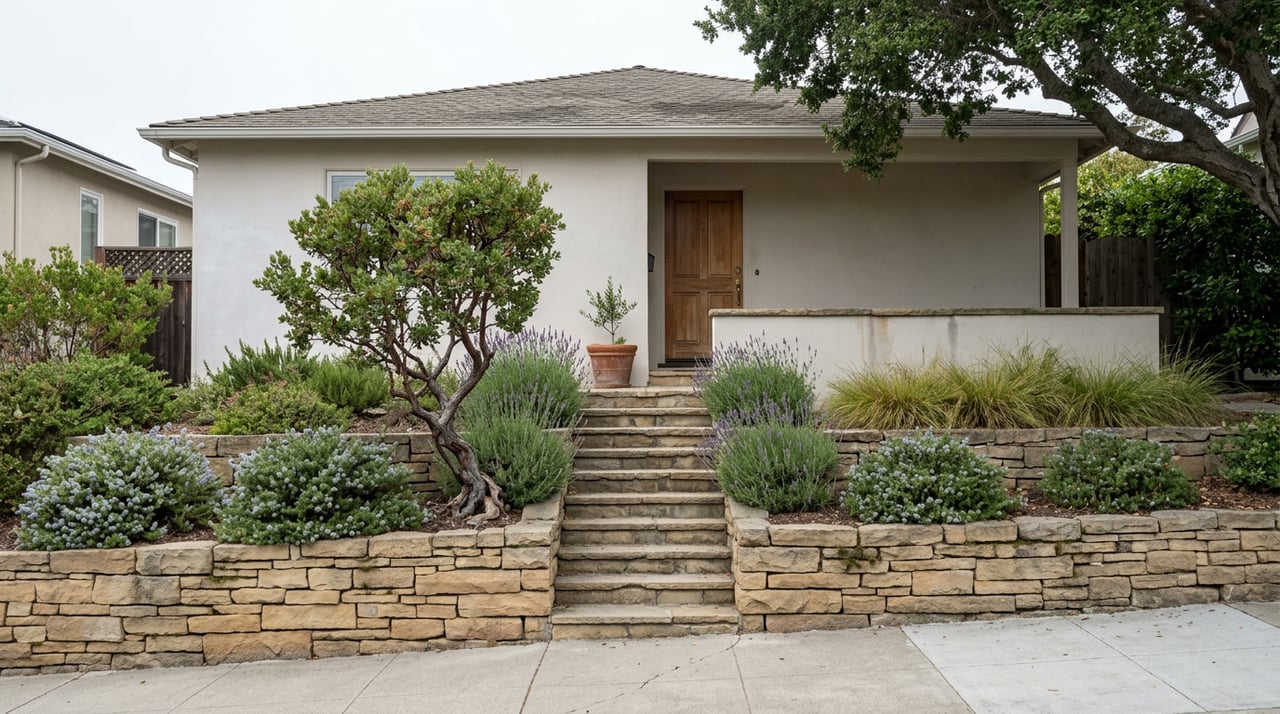
Monterey CA Neighborhood Home Prices by Area
August 13, 2026
August 13, 2026
In March 2026, one widely used housing data source put Monterey's median sale price at $875,000, a drop of more than 31 percent from the year before. By late June, another source's home value index had the city's typical value at $1,180,394, down just 1.6 percent year over year. A third tally of June closings landed higher still, at $1,199,500. Same city. Same general stretch of 2026. Three numbers that disagree by close to $325,000.
None of these figures are wrong exactly. They're just measuring a market that doesn't behave like one market. Monterey sold only 19 homes in March 2026, up from 13 the year before. When your monthly sample size is that small, a handful of transactions in different pockets of town can swing a median by hundreds of thousands of dollars without a single home actually losing value. The city didn't crash and rebound in a quarter. The mix of what happened to sell that month shifted, and the median moved with it.
This matters if you're comparing neighborhoods on the Monterey Peninsula, because it means the headline number you saw on a portal search isn't really describing anything you can act on. The useful question isn't "what's Monterey's median price." It's "what does this specific street, at this specific elevation, actually cost." That answer varies more within Monterey's city limits than most buyers expect.
Neighborhood-level data from May 2026 makes the spread concrete:
| Neighborhood | Median Sale Price (May 2026) |
|---|---|
| Del Monte Beach | $849,000 |
| Upper Seaside | $900,000 |
| New Monterey | $1,085,000 |
| Skyline Forest | $1,235,000 |
| Monterey Vista | $1,329,000 |
| Old Town | $1,392,500 |
| Oak Grove | $1,579,000 |
That's an 86 percent gap between the least and most expensive of these seven pockets, all inside the same city, most of them within a few miles of one another. A buyer working off the citywide median has no way of knowing which end of that range they're actually shopping.
What's driving the gap isn't primarily square footage. It's a combination of elevation, view corridor, and proximity to a handful of specific anchors that Monterey Peninsula buyers care about. Two neighborhoods make that mechanism especially visible.
New Monterey sits on a hill above the bay, a neighborhood that dates back to 1920 and includes Cannery Row itself. Last fall, homes here were closing around $990 a square foot, well above the roughly $693 a square foot the city posted as its broader March 2026 average. That's a meaningful premium for a neighborhood built mostly of older, smaller-footprint cottages and bungalows rather than new construction.
The premium isn't about the houses. It's about what's within walking distance. New Monterey carries a Walk Score of 76, and residents can reach the Sardine Factory, a seafood restaurant that has operated since 1968 and won Wine Spectator's Award of Excellence in 2023, along with Chart House and its bay-view dining room, Wave Street Café, and the Steinbeck-era monuments along Cannery Row, all without a car. Trader Joe's and Safeway anchor daily errands. A buyer chasing square footage per dollar would look right past this neighborhood. A buyer who understands that walkability and a view corridor are what actually move Monterey Peninsula prices would look here first.
Skyline Forest, three miles south of downtown between Monterey and Carmel bays, shows the same mechanism working inside a single neighborhood boundary. Single-family homes here run roughly $1.5 million to $2.2 million, and the price climbs as the lot climbs. Two-bedroom condos in the same area run $725,000 to $900,000, with larger units in gated complexes reaching $1 million to $1.2 million. One local agent, describing the pattern, put it simply: prices go up as elevation goes up.
The amenities are shared across every price tier. Golfers reach Poppy Hills Golf Course a few miles away. Hikers use the Wild Boar Trail and Presidio View Trail inside Veterans Memorial Park. Everyone shops the Del Monte Shopping Center, anchored by Macy's, Gap, and Williams-Sonoma, and browses the Del Monte Farmers Market on Thursday mornings. Dinner options include Kona Steak and Seafood and Lalla Grill Del Monte. None of that changes between a $750,000 condo and a $2 million view lot. What changes is a few hundred feet of elevation and the sightline it buys.
Old Town posted a $1,392,500 median in May 2026, the second highest of the seven neighborhoods above, and its housing stock skews older and smaller than that price might suggest. Part of the explanation is a mechanism that has nothing to do with location and everything to do with age. California's Mills Act allows qualifying historic properties to enter a contract with the city that reduces property tax in exchange for a commitment to preservation.
The 1929 Ruth S. Rodefer House on Harrison Street was designed by architect Albert B. Coats and inspired by Monterey's Old Custom House. Not every historic property qualifies, and the terms depend on the specific contract, so this is worth raising directly with a tax professional and the city before assuming any older home carries the same benefit. But it's a factor that changes the actual holding cost of Old Town's oldest cottages, and it rarely shows up in a portal's price-per-square-foot column.
Put together, these three neighborhoods point to the same conclusion from three directions. The citywide median is a statistical average of markets that don't share much in common, and it moves around month to month partly because Monterey's transaction volume is small enough that a handful of sales can swing it. New Monterey shows that walkability and a Cannery Row address can matter more than square footage. Skyline Forest shows the same thing can happen within a single neighborhood, driven by elevation alone. Old Town shows that two homes at the same price point can carry different real costs depending on a tax mechanism most buyers never ask about.
None of this means Monterey is unpredictable. It means the predictable part isn't the citywide number. It's the neighborhood, the block, and in some cases the elevation contour a specific lot sits on.
Does a lower price per square foot always mean a better deal in Monterey? Not necessarily. New Monterey's smaller, older cottages often carry a higher per-foot price than larger homes elsewhere in the city because of walkability and view access, not because they're overpriced.
Is every historic home in Old Town eligible for a Mills Act contract? No. Eligibility depends on the property's historic designation and the specific contract terms, and this should be confirmed with the city and a tax professional rather than assumed from a listing description.
Why did Monterey's citywide median seem to swing so much in a single quarter? Monterey's monthly transaction volume is small, sometimes under twenty sales in a month. A shift in which neighborhoods happen to close that month can move the median by a large margin without reflecting an actual change in what individual homes are worth.
If you're weighing a home in New Monterey against one in Skyline Forest or Old Town, the comparison that matters isn't the city's median price. It's what a specific street, at a specific elevation, actually delivers for the number on the listing. That's the kind of read that comes from walking these blocks regularly, not from a citywide average.
If you'd like to talk through what a specific Monterey neighborhood is actually doing right now, reach out to Scherling Properties. Let's Connect.
This article is general information, not legal, tax or financial advice. Consult a qualified professional about your situation.
Stay up to date on the latest real estate trends.
A Look at Carmel Valley Real Estate and Everyday Life.

A Guide to Pebble Beach Golf and the Wider Monterey Peninsula.

An Insider's Guide to the Pebble Beach Concours d'Elegance.

What to Know About Buying Pebble Beach Real Estate.

A Practical Guide to Coastal Home Maintenance on the Monterey Peninsula.

Everything to Know About Driving 17-Mile Drive in Pebble Beach.
Get assistance in determining current property value, crafting a competitive offer, writing and negotiating a contract, and much more. Contact Stacey today.