By Stacey Scherling
One of the things I love most about living in Pebble Beach is the outdoor life. The Monterey Peninsula's climate is genuinely exceptional for outdoor entertaining. Yes, the fog rolls in. Yes, the afternoons can surprise you. But with the right setup, a patio here becomes one of the most-used rooms in the house for ten or eleven months of the year. I have toured hundreds of homes across Carmel, Pebble Beach, and the surrounding communities, and the properties that show best almost always have outdoor spaces that feel as considered as the interior.
Key Takeaways
- Demand for functional outdoor spaces on the Monterey Peninsula has grown significantly, making a well-designed patio a direct contributor to home value and buyer appeal
- Coastal conditions require specific material choices: stone, composite decking, and sealed hardwood outperform materials that degrade in salt air
- All-weather coverage and heat sources extend patio usefulness through the Peninsula's foggier months
- The most successful outdoor spaces are designed as genuine extensions of the interior, not separate afterthoughts
Design the Patio as a Room
The biggest shift in how Peninsula homeowners approach their outdoor spaces is conceptual. The patio is not the area outside the house — it is a room of the house that happens to be open to the sky and the garden. That framing changes every decision that follows, from how much you invest in the space to how you furnish and light it.
A room has defined zones. A patio designed as a room has a seating area for conversation, a dining area for meals, and a transition zone connecting the two. These zones do not need to be large. Carmel cottages and Pebble Beach properties often have patio spaces that are intimate rather than expansive.
Foundational decisions before furniture or plants
- Establish the footprint: determine how much of the outdoor space will be hardscaped versus planted, and where the primary use zones will sit
- Consider the sun and wind: the Monterey Peninsula's prevailing afternoon wind comes from the northwest; knowing where it hits your property determines where to site seating and where to consider screening
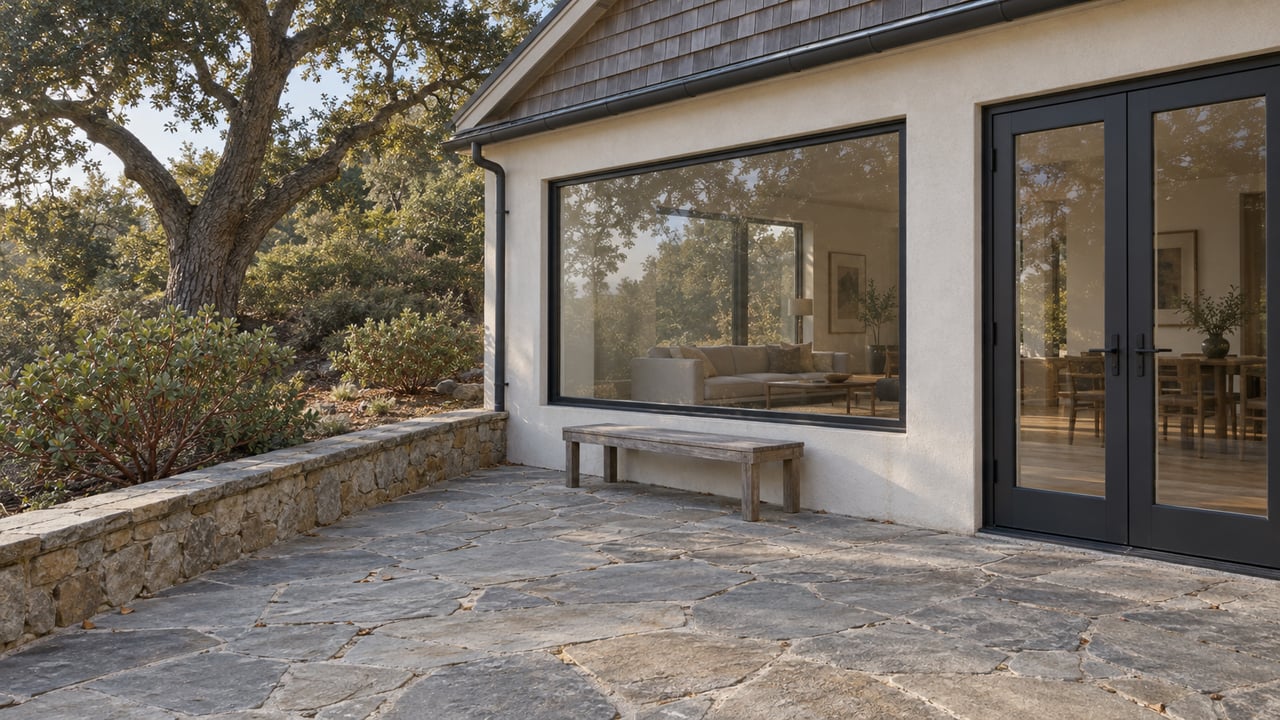
- Plan drainage before you pave: permeable paving approaches such as decomposed granite or flagstone with open joints manage water better than solid concrete and suit the natural aesthetic of the Peninsula
Choose Materials That Survive the Coast
Salt air, moisture, UV exposure, and the temperature swings between fog and afternoon sun combine to degrade materials that perform well in other climates. Every material decision here should be evaluated against that reality.
Materials that hold up on the Peninsula
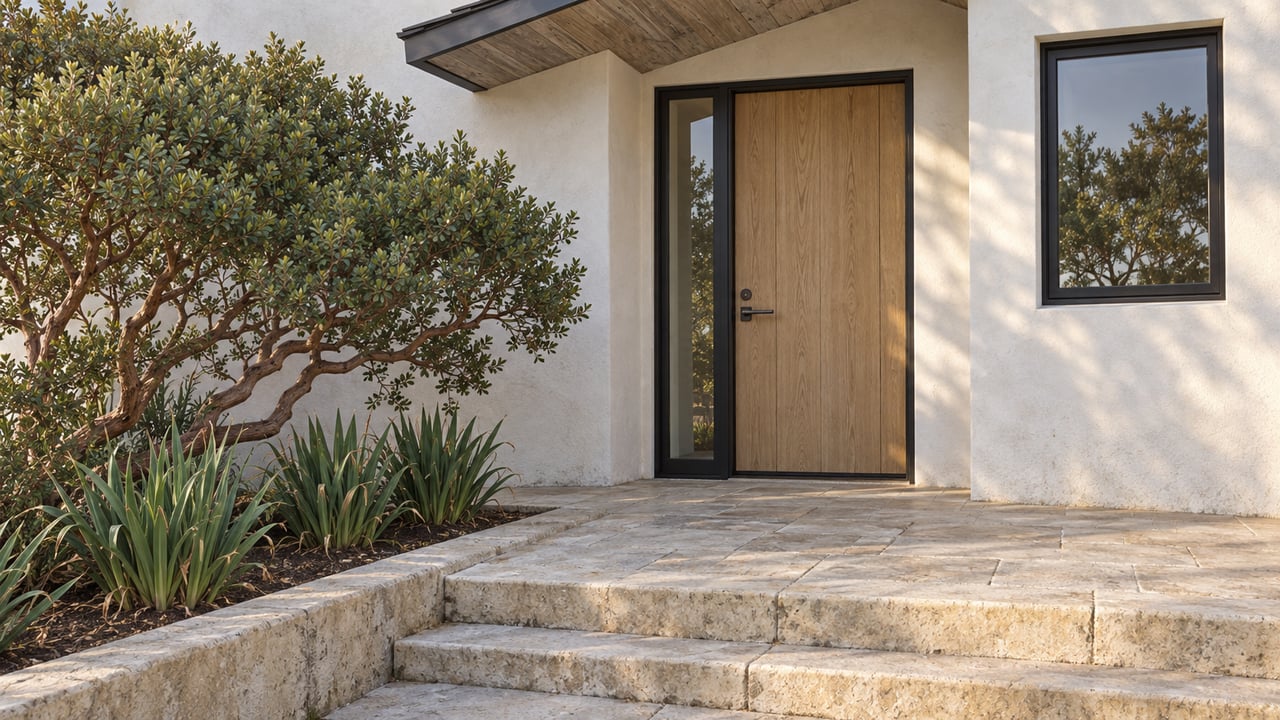
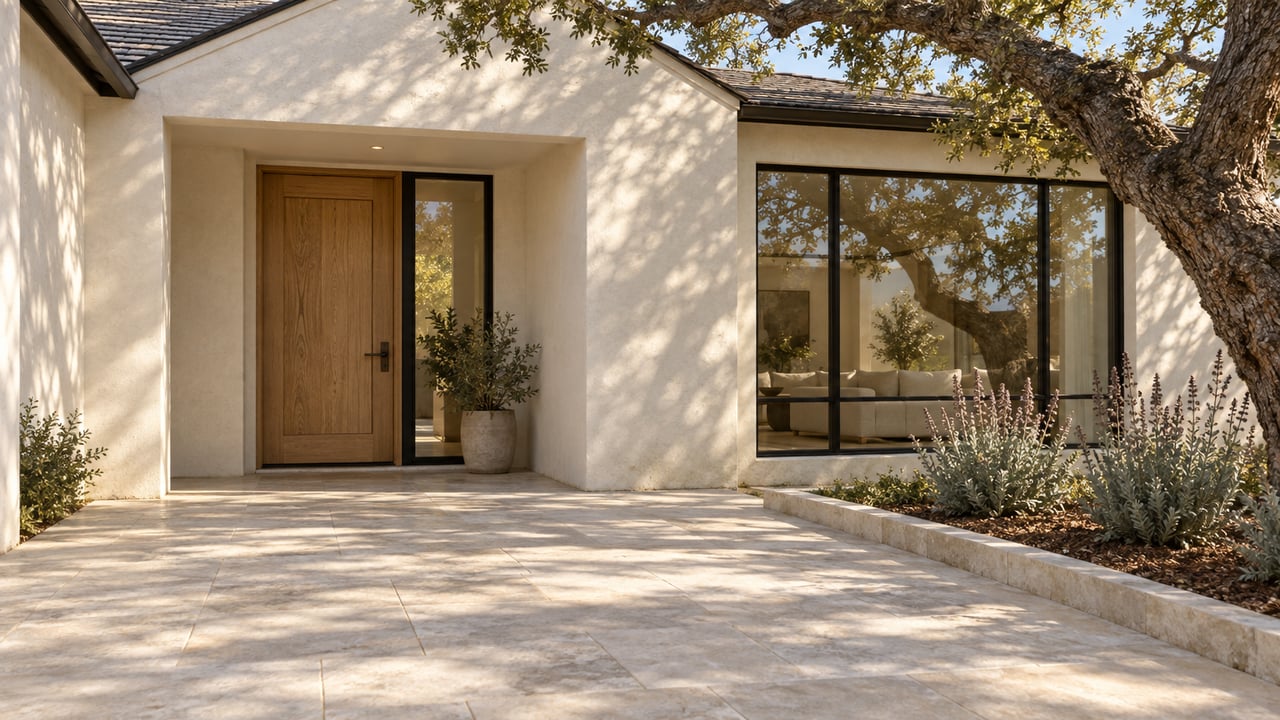
- Natural stone is the strongest long-term investment for patio surfacing. It handles moisture, resists salt air, and suits the architectural vocabulary of Carmel and Pebble Beach homes. Locally sourced sandstone and slate read as particularly at home on the Peninsula.
- Composite decking is appropriate for elevated deck applications where a wood aesthetic is desired without the maintenance burden
- Teak and ipe are the most durable natural wood choices for outdoor furniture; both resist moisture and can be left to weather or maintained with periodic oil treatment
- Powder-coated aluminum for furniture frames resists corrosion far better than wrought iron in a salt air environment
- Sealed concrete for walls and raised planters; left unsealed, concrete in a coastal environment can show surface degradation within a few years
Add Coverage and Heat for Year-Round Use
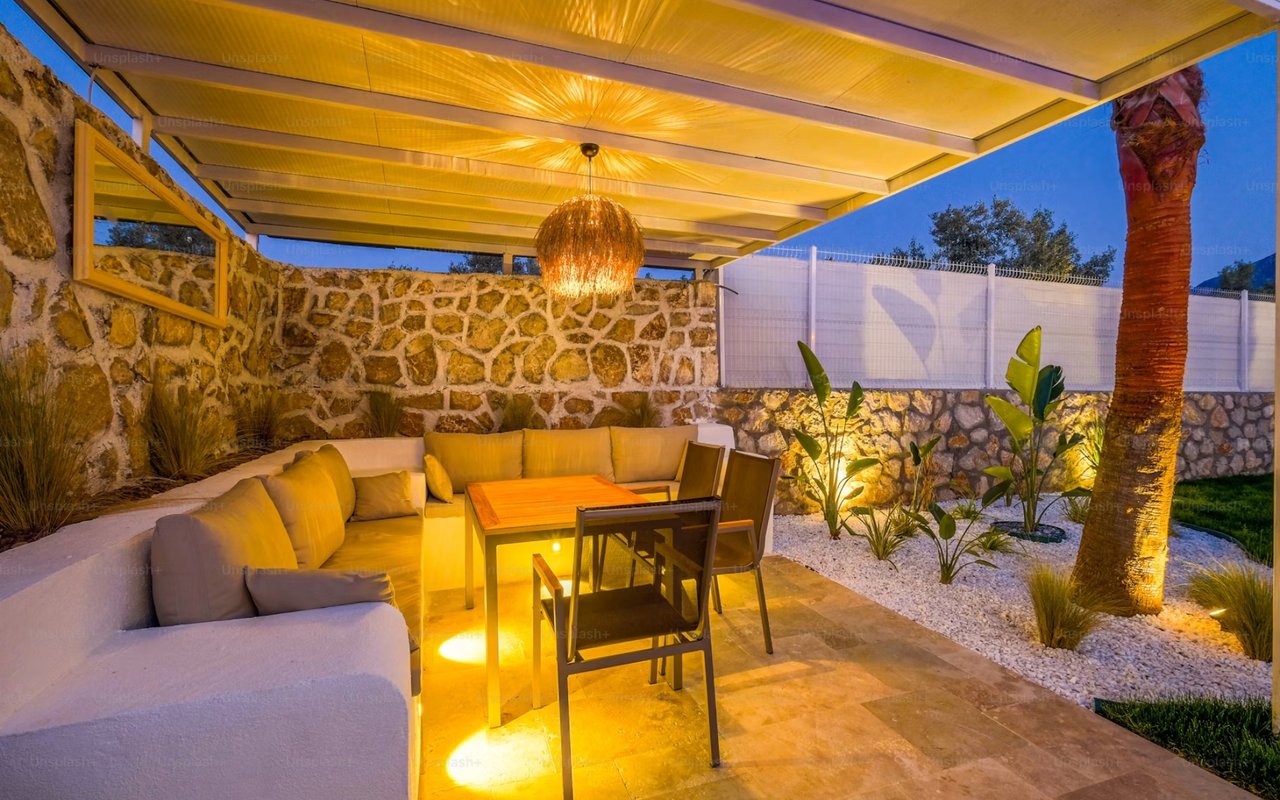
The single upgrade that most significantly extends patio usability through the foggier months is overhead coverage. A pergola, covered outdoor room, or retractable awning transforms an afternoon under cloud cover from an uncomfortable experience into a genuinely pleasant one. Paired with a heat source, coverage allows outdoor entertaining to continue well into the evening on even the coolest Peninsula nights.
Coverage and heating options suited to the Peninsula climate
- Solid-roof pergolas and covered outdoor rooms provide complete protection from fog-driven moisture, allowing furniture and soft furnishings to remain in place year-round
- Retractable awnings over dining areas offer flexibility: full sun on clear days and coverage when needed
- Infrared patio heaters mounted overhead produce efficient, natural-feeling warmth by heating occupants rather than the surrounding air — which matters on breezy Peninsula evenings
- Fire pits and outdoor fireplaces in stone or cast iron serve both functional and atmospheric purposes; a stone fireplace built into a garden wall suits the Peninsula landscape and functions well as a gathering point
Furnish for Comfort and Longevity
Outdoor furniture that looks good on a showroom floor does not always survive a Monterey Peninsula winter. Purchasing for longevity rather than initial appearance is the practical approach in this climate.
Furnishing principles for Peninsula outdoor spaces
- Seat depth matters: deep-seated lounge chairs and sofas with quality outdoor cushions create the relaxed, residential quality that makes a space genuinely inviting
- Scale to the space: oversized furniture in a small Carmel cottage garden overwhelms rather than enhances; choose pieces proportional to the area and preserve sightlines to the garden and any water views
- Outdoor rugs define zones and improve comfort on stone or concrete; a natural fiber or synthetic outdoor rug under a seating group signals that this is a room, not an open area
- Invest in cushion quality: Sunbrella or equivalent marine-grade fabric holds color and resists mildew in coastal conditions far longer than standard outdoor fabrics
FAQs
What outdoor materials hold up best in Carmel and Pebble Beach?
Natural stone is the strongest long-term choice for hardscaping in the Peninsula's coastal environment. For furniture, teak, ipe, and powder-coated aluminum all perform well in salt air. Materials that degrade most quickly include untreated iron, low-grade composite, and unfired ceramic tile.
Is a covered patio worth the investment on the Monterey Peninsula?
Yes, consistently. The Peninsula's climate means fog and cool temperatures can arrive on any afternoon from late spring through early fall. A covered outdoor space extends usability through those conditions and allows furnishings to remain in place year-round. In my experience selling homes here, covered outdoor spaces generate strong interest from buyers who understand what Peninsula living actually involves.
What size patio makes sense for a Carmel cottage lot?
The right size allows a primary seating zone and a dining zone without consuming the garden entirely. A compact, well-designed stone patio surrounded by planted beds is more in keeping with the village's aesthetic than a large paved area that eliminates the garden.
Prepare or Find Your Pebble Beach Home With Scherling Properties
I am a member of the Beach and Tennis Club in Pebble Beach and the Stillwater Yacht Club, and outdoor living on the Peninsula is genuinely central to how my family experiences this community. I bring that firsthand understanding to every conversation about what makes a home worth owning here.
Reach out to me,
learn more about my work in Pebble Beach and Carmel and let's start a conversation.