By Scherling Proper
The home office has permanently earned its place as one of the most important rooms in a house. Whether you are running a business remotely, managing a portfolio, or simply need a focused space away from the kitchen table, the quality of your workspace has a direct impact on the quality of your work. On the Monterey Peninsula, where many homeowners split their time between here and a primary city, a well-designed home office also signals that the home can fully support a professional life — which buyers increasingly expect and will pay for. Here is how to design a space that is both genuinely functional and worth walking into every morning.
Key Takeaways
-
Location and separation from living areas are the first decisions to get right
-
Ergonomic furniture reduces fatigue and supports sustained productivity
-
Lighting — natural and artificial — has a significant effect on focus and mood
-
Cable and clutter management is what separates a good office from a great one
-
Personalization makes the space feel motivating rather than utilitarian
Choose the Right Location First
The biggest mistake in home office design is treating it as an afterthought — setting up in whatever corner is available rather than choosing a location intentionally. The best home offices have some degree of separation from the main living areas, access to natural light, and enough acoustic privacy to take calls without background noise.
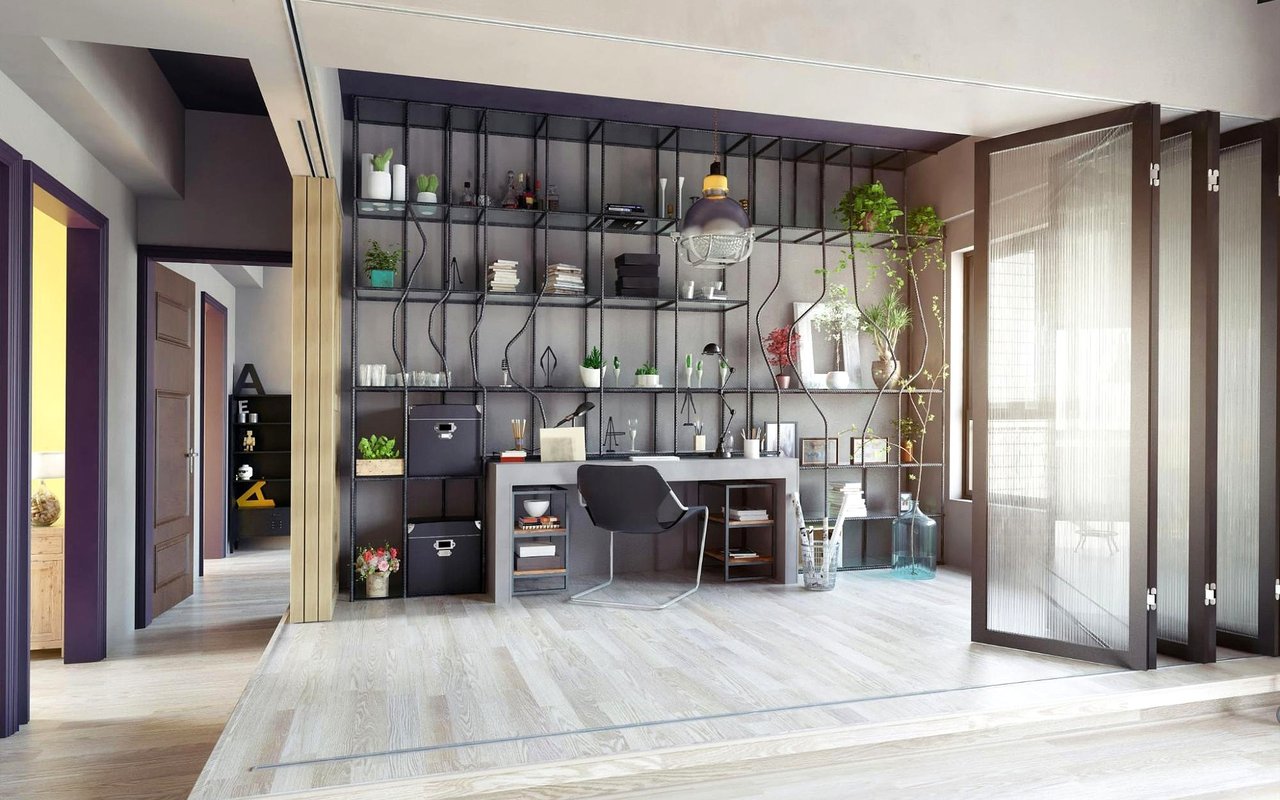
In Pebble Beach and Carmel homes, a dedicated study, a converted guest room, or a quiet wing of the house all make strong candidates. If the home does not have a dedicated room, a built-in alcove or a partitioned section of a larger room can work well when properly designed.
What to look for in a home office location:
-
Access to a window with natural light, ideally facing north or east
-
Distance from high-traffic household areas like kitchens and living rooms
-
Proximity to a power source and strong Wi-Fi signal
-
Enough square footage to accommodate a proper desk, chair, and storage
Invest in Ergonomic Furniture
A home office where you feel uncomfortable by noon is not a functional home office. Ergonomic furniture is the foundation of a space you can actually spend hours in. An adjustable chair with lumbar support, a desk at the right height for your posture, and a monitor positioned at eye level are not luxury additions — they are the baseline.
Sit-stand desks have become standard in well-designed workspaces. The ability to shift between sitting and standing throughout the day supports circulation and reduces the fatigue that comes from staying in one position for too long.
Furniture priorities for a functional home office:
-
An ergonomic chair with adjustable seat height, lumbar support, and armrests
-
A desk with enough surface area for your actual workflow, not just a laptop
-
A sit-stand option or a separate standing desk surface
-
Monitor arms to position screens at the correct eye height
-
A secondary seating area for calls or video meetings if space allows
Get the Lighting Right
Lighting is where many home offices fall short. Overhead lighting alone creates a flat, fatiguing environment. A layered lighting plan — combining natural light from windows, task lighting for focused work, and ambient lighting for overall warmth — produces a space that is comfortable to work in at any hour.
Natural light is the first priority. Position the desk to receive daylight from the side rather than directly behind or in front of a screen, which causes glare and eye strain. For evening or overcast days, a quality desk lamp with adjustable color temperature — cooler tones for focus, warmer tones for winding down — makes a real difference.
Lighting elements for a well-designed home office:
-
A north or east-facing window for consistent, glare-free natural light
-
A quality desk lamp with adjustable brightness and color temperature
-
Recessed or track lighting to supplement overhead coverage
-
Backlighting behind monitors to reduce eye strain during long sessions
-
Dimmer switches on overhead fixtures to adjust throughout the day
Manage Cables and Clutter
A desk buried in cables undermines every other design decision in the room. Cable management is one of the most impactful upgrades you can make, and it costs very little relative to the visual improvement. Cable sleeves, under-desk trays, and power strips mounted to the back of the desk keep wires contained and surfaces clear.
Clutter follows a similar principle: the more surfaces you have available, the more will accumulate on them. Closed storage — drawers, cabinets, and shelving with doors — keeps supplies and papers out of sight. A clean desk surface is not just more visually appealing; it is cognitively easier to work at.
Practical clutter control strategies:
-
Mount a power strip under the desk and route all cables to it
-
Use a single cable trough or sleeve to bundle cords from monitor, lamp, and devices
-
Install closed cabinetry above or below the desk for supplies and paperwork
-
Keep only current projects on the desk surface — archive or file everything else
-
Use a compact filing system for documents that need regular access
Add Personal Touches That Make It Yours
A home office that feels sterile is harder to spend time in than one that reflects who you are. A few deliberate personal elements — a piece of artwork, a plant, books that matter to you, a rug that grounds the space — shift the room from functional to genuinely enjoyable. On the Monterey Peninsula, where the natural surroundings are so central to daily life, bringing that sensibility indoors through coastal tones, organic materials, and greenery works particularly well.
Biophilic design — incorporating natural elements like wood, stone, plants, and views of the outdoors — has become one of the dominant trends in home office design, and for good reason. It reduces stress and maintains the connection to environment that makes working from home feel like a benefit rather than a compromise.
Personal touches that improve the space:
-
One or two plants that thrive in indoor light conditions
-
A rug that defines the workspace and adds warmth underfoot
-
Art or photography that is meaningful to you without being distracting
-
Natural material finishes — wood desk surfaces, linen curtains, stone accents
-
A view of the garden or landscape if the room allows for it
FAQ
How much space do I actually need for a functional home office?
A dedicated home office can work well in as little as 100 square feet if the layout is planned carefully. The desk, chair, and storage are the non-negotiables. Beyond that, the space you need depends on your workflow — whether you take frequent video calls, work with physical documents, or need room for reference materials and equipment.
Does a home office add value when selling a home?
Yes, and increasingly so. Buyers with remote or hybrid work arrangements actively look for dedicated office space, and a well-designed home office is a meaningful differentiator in a listing. On the Monterey Peninsula, where buyers often come from San Francisco and Silicon Valley with professional lifestyles intact, a thoughtful home office can be a genuine selling point.
What is the single most impactful upgrade for a home office?
Lighting, consistently. A well-lit workspace with layered lighting makes every other element of the room look and feel better. It is also one of the more affordable upgrades — a quality desk lamp and dimmer switches on overhead fixtures go a long way.
Work With a Pebble Beach Real Estate Expert
A home that supports your full life — including how you work — is exactly what buyers on the Monterey Peninsula are looking for. I help my clients find properties that fit their professional needs as much as their lifestyle ones, and I know which features make a difference at resale. Reach out to me to
learn more about buying or selling a home in Pebble Beach and Carmel and let's find the right fit for where you are headed.