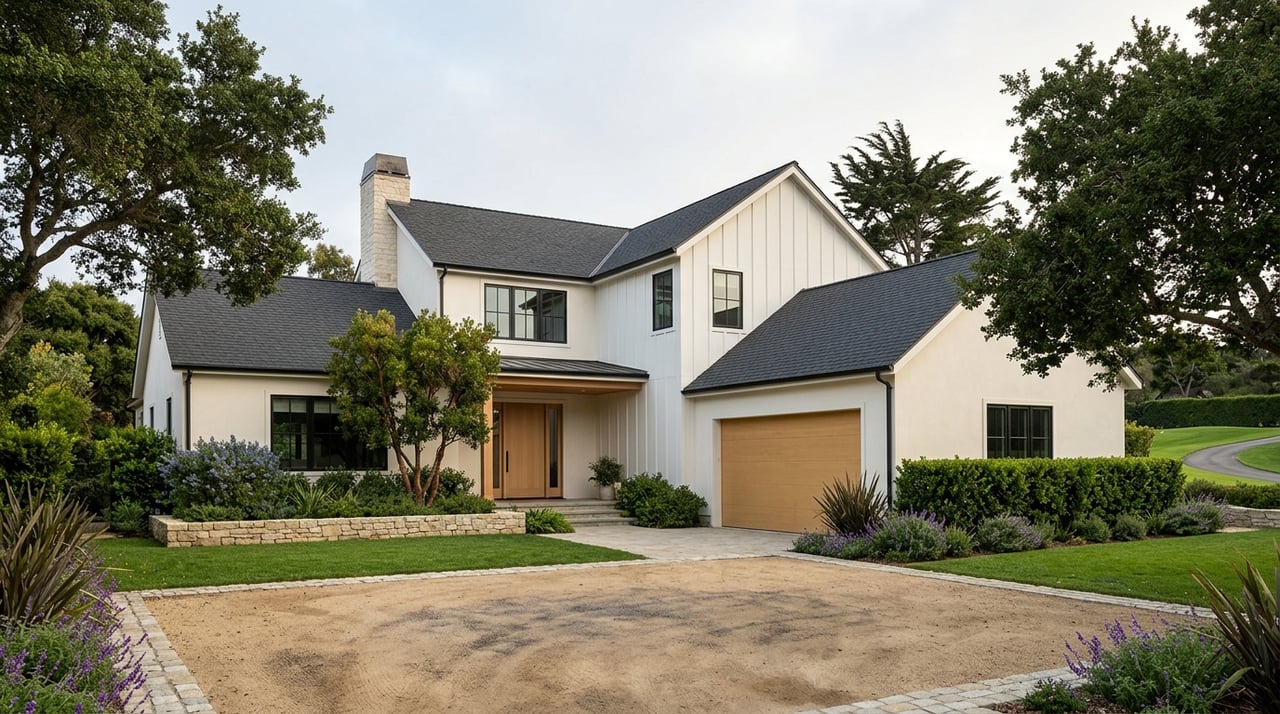
What Buyers Should Know About Pebble Beach Golf Homes
May 14, 2026
May 14, 2026
If you’re thinking about buying in Pebble Beach, it helps to know that you are not just shopping for a house. You are choosing a specific setting within one of the Monterey Peninsula’s most distinctive coastal golf communities, where views, privacy, access, and lot position can shape value as much as square footage. When you understand how Pebble Beach works, you can compare homes more confidently and focus on what fits your lifestyle best. Let’s dive in.
Pebble Beach is an unincorporated Monterey County planning area in the Del Monte Forest at the southern end of the Monterey Peninsula. It is closely tied to 17-Mile Drive and is widely associated with iconic golf destinations like Pebble Beach Golf Links, Cypress Point Club, and Monterey Peninsula Country Club.
That identity matters because Pebble Beach does not function like a typical city neighborhood. Local services are organized differently, and the Pebble Beach Community Services District provides fire protection, emergency medical services, wastewater collection and treatment, recycled water distribution, garbage and recycling collection, and supplemental law enforcement.
For you as a buyer, that means the day-to-day experience can feel more private and more specialized than in a standard incorporated market. It also means it is smart to understand local service structures early as you narrow down properties.
Golf may be the headline, but the setting is a big part of what drives demand in Pebble Beach. The area includes a large amount of preserved land, with 25% of Pebble Beach held as permanent open space and more than 25 miles of hiking, walking, and equestrian trails.
That open space influences how the community looks and feels. Greenbelts, mature trees, and protected land can create a sense of separation and calm that many buyers want, especially in a second home or coastal retreat.
It also helps explain why view corridors and natural surroundings can have such a strong effect on pricing. In Pebble Beach, a home’s connection to the landscape is often central to its appeal.
17-Mile Drive is more than a scenic route. It is private road infrastructure, with access granted by permission, private security patrols, and gates open to the public from sunrise to sunset.
There are practical implications here. Touring schedules, guest access, commute patterns, and the overall privacy profile of a home can all be shaped by where it sits in relation to the drive and its gates.
If you are comparing homes, it is worth thinking beyond the address itself. Consider how often you plan to come and go, whether you want quick access in and out, and how much value you place on a tucked-away feel.
In Pebble Beach, the view is often part of the product. Some homes capture Monterey Bay, Point Lobos, Carmel Beach, fairways, or elevated tree-top outlooks, while others trade broad views for a more sheltered and private setting.
That is why two homes with similar square footage can feel completely different in person. A home that looks out over a fairway or the ocean may offer dramatic scenery, but it may also have a different privacy profile than a more wooded property.
When you tour homes, ask specific questions about what the property overlooks and from where. The right questions include:
A beautiful view can be a major value driver, but only if it matches how you want to live.
Not every Pebble Beach lot is simple or flat. Some homes sit on narrow or sloping sites, and topography can shape everything from driveway access to outdoor living to how the floor plan unfolds.
A custom home profiled in Pebble Beach was built on a narrow half-acre sloping lot with terraces facing multiple directions. That example is a useful reminder that lot shape and elevation are not just technical details. They affect the daily feel of the home.
For you, that means it is important to evaluate the site as carefully as the house itself. A well-designed home on a challenging lot can be exceptional, but you should understand how the land influences usability, light, and privacy.
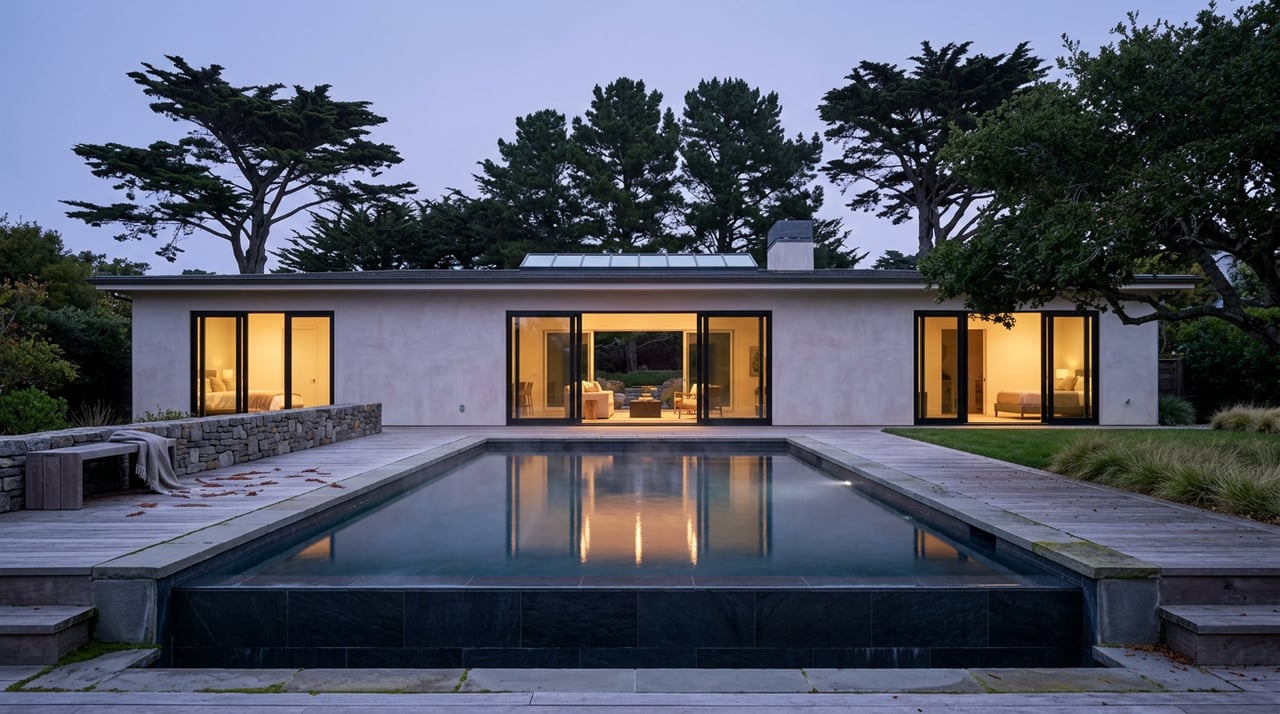
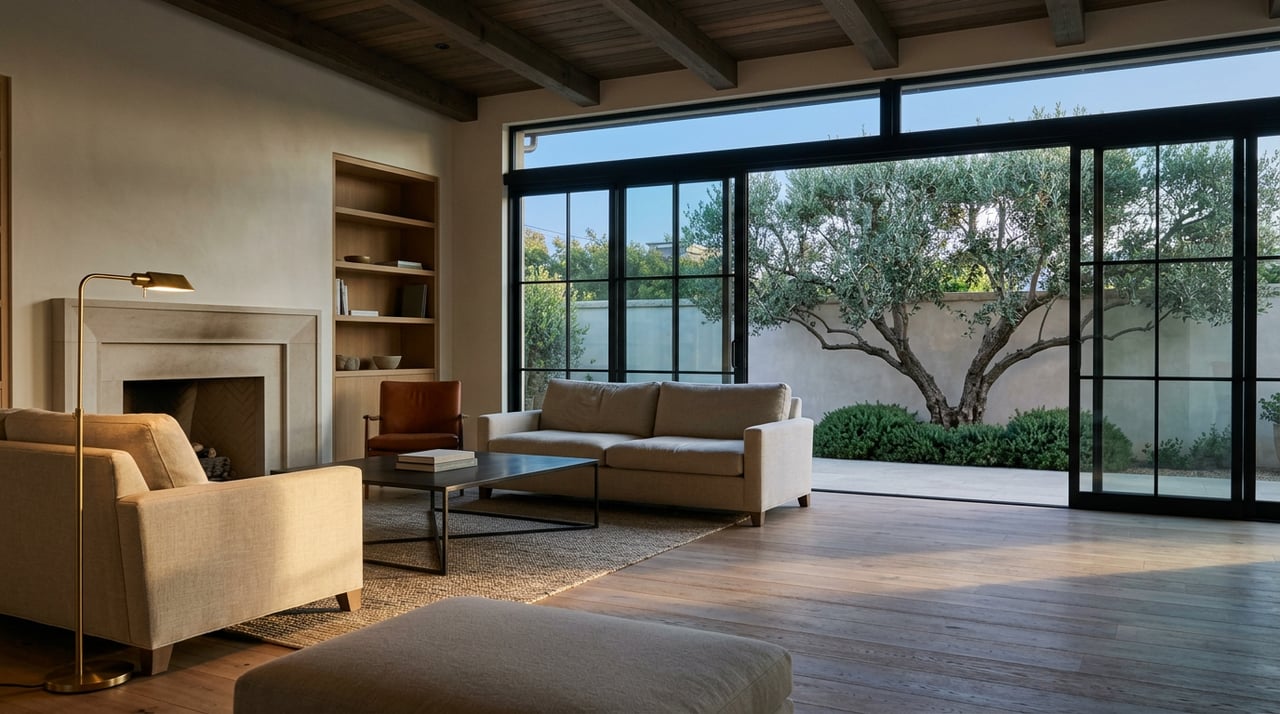
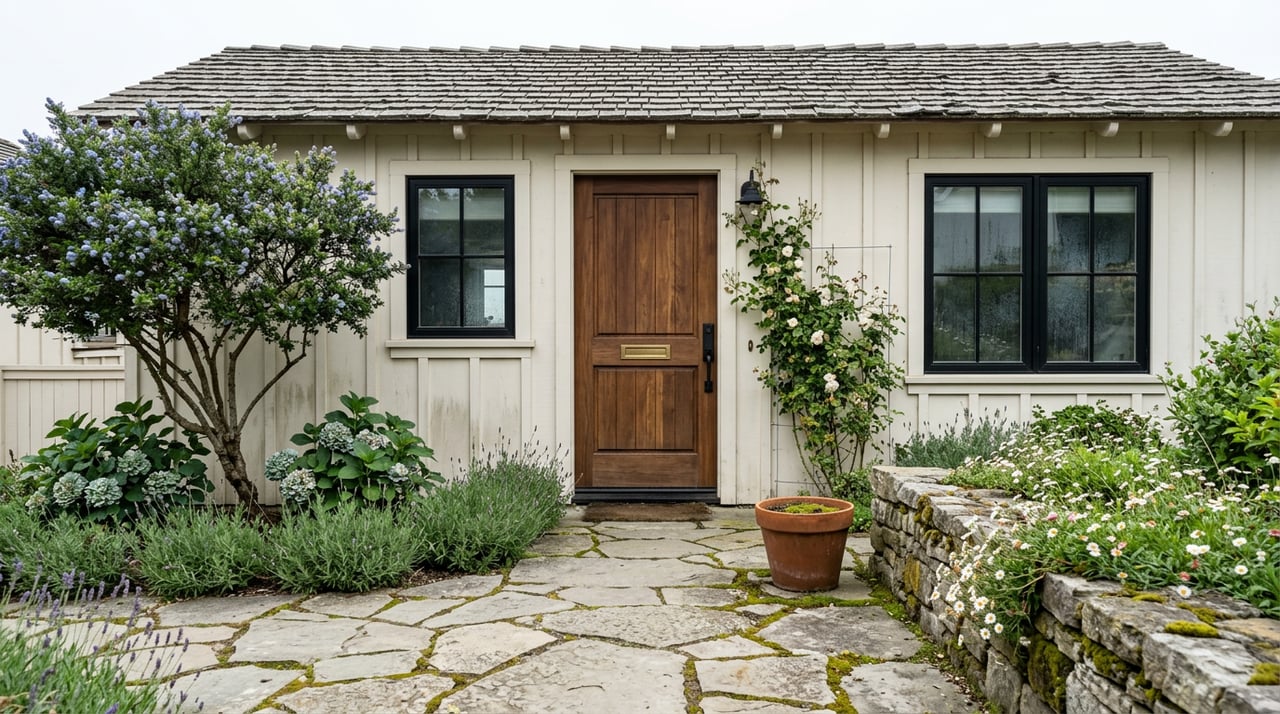
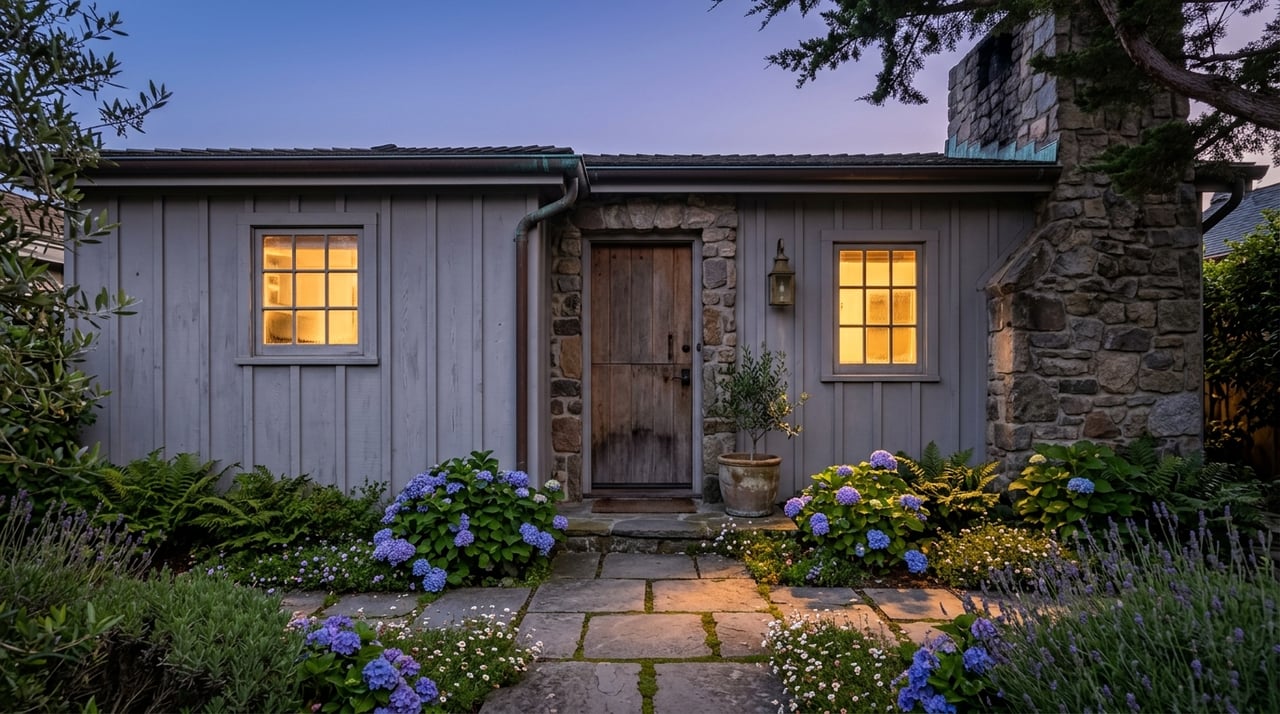
One of the strengths of Pebble Beach is that it does not feel architecturally one-note. Monterey County’s historic context shows a progression from early rustic and log-style homes to Mediterranean-style controls in the 1920s, followed later by Ranch, Colonial Revival, and Mid-Century Modern homes.
You may also see influences from Craftsman, Tudor or English Cottage, Prairie, French Eclectic, and Neoclassical traditions. In practical terms, that means your search can include everything from classic coastal character to more contemporary infill.
This variety can be a real advantage if you know what you want. It also means you should compare homes by design quality, lot fit, and condition, not just by age or style label.
If you are considering a major remodel, addition, or rebuild, Pebble Beach has an added layer of planning to keep in mind. Reported design review standards include evaluation of size, height, and compatibility with Spanish Mediterranean and California Contemporary styles.
That does not mean change is off the table. It means new construction and major renovations are not handled casually, and review can affect both timeline and design direction.
If a property seems attractive mainly because of its future potential, make sure you factor that review process into your expectations. In a market like Pebble Beach, the existing site may be only part of the opportunity.
Pebble Beach sits firmly in the luxury tier. Recent market figures place the median sale price around $3.7 million to $4.0 million, with examples ranging from about $1.895 million to $24.5 million.
That is a wide spread, and it tells you something important. In Pebble Beach, price movement is driven heavily by micro-location, view quality, lot position, and the overall experience of the property.
For context, Monterey County’s median sale price was $872,500 in March 2026, Monterey was $875,000, Pacific Grove was roughly $1.36 million to $1.4 million, Carmel was $4.4 million, and Carmel Valley Village was $1.6 million. Pebble Beach clearly operates above much of the county and alongside other luxury coastal markets on the peninsula.
Within the same broader community, one property may be priced far above another for reasons that are easy to miss online. The difference may come down to ocean frontage, fairway positioning, level of privacy, architectural pedigree, or how the home captures light and views.
That is why price per square foot is only one piece of the story here. A smaller home on a better-sited lot may command stronger interest than a larger home with less compelling orientation.
If you are serious about buying in Pebble Beach, it helps to think in layers:
That approach gives you a clearer framework than comparing size alone.
A common assumption is that buying in Pebble Beach automatically comes with simple golf access. In reality, access works in different ways depending on the course, the club, and the type of membership or booking you want.
Pebble Beach Golf Links is publicly bookable, but non-resort guests may book only one day in advance. Pebble Beach Resorts also offers separate products such as Duke’s Club, Practice Facility membership, and Beach & Tennis Club membership.
For buyers, the takeaway is straightforward: verify what, if anything, transfers with a property and what would need to be arranged separately. If golf access is central to your decision, this should be one of your earliest questions, not an afterthought.
Some buyers want active club access. Others simply want to live near world-class golf, ocean scenery, and a recognizable Pebble Beach setting.
That distinction matters because the right home for you depends on your actual priorities. If you mainly want the atmosphere, a property with strong privacy and a beautiful natural setting may fit better than one chosen primarily for course proximity.
On the other hand, if your lifestyle centers on regular tee times or practice access, you will want to evaluate homes through that lens from the start. In Pebble Beach, the lifestyle match is just as important as the property match.
On the Monterey Peninsula, not every golf community offers the same experience. Pebble Beach is the clearest fit if you want an ocean-forward, resort-defined setting with strong ties to iconic coastline and golf.
Other options on the peninsula create a different feel. Pasadera is a gated community centered on TPC Monterey at Pasadera in Monterey, while Quail Lodge is set in the rolling hills of Carmel Valley on the sunnier side of the peninsula.
That comparison can be useful if you are still deciding what kind of golf lifestyle suits you. If the dream is classic coastal golf living with dramatic scenery and a distinct sense of place, Pebble Beach stands apart.
Before you fall in love with a listing, focus on the questions that matter most in this market. Pebble Beach homes are often defined as much by siting and setting as by finishes and room count.
Here are a few smart questions to bring into every showing:
These questions can help you move from general interest to real clarity.
The most successful Pebble Beach buyers usually start with lifestyle, then narrow by property. They get clear on whether they want ocean outlooks, fairway views, maximum privacy, easier access, or renovation potential, and then they compare homes through that filter.
That matters in a market where values can shift dramatically from one pocket to the next. A thoughtful strategy can save you time and help you recognize the right opportunity when it appears.
If you are exploring Pebble Beach, local context is everything. The right guidance can help you see beyond the photos and understand what truly makes one home a better fit than another.
If you’re considering a move in Pebble Beach or anywhere on the Monterey Peninsula, Scherling Properties can help you navigate the details with calm, local insight and a personalized approach.
Stay up to date on the latest real estate trends.
Get assistance in determining current property value, crafting a competitive offer, writing and negotiating a contract, and much more. Contact Stacey today.